

What does WTV mean in text conversations today? If you’ve seen this abbreviation pop up in messages, comments, or DMs, you’re not alone in wondering about its true significance and usage patterns.
WTV meaning in text has become increasingly common across social media platforms and casual digital communication. Understanding this slang term helps you navigate modern texting culture and interpret messages with the right tone and context accurately.
Definitions & Meaning
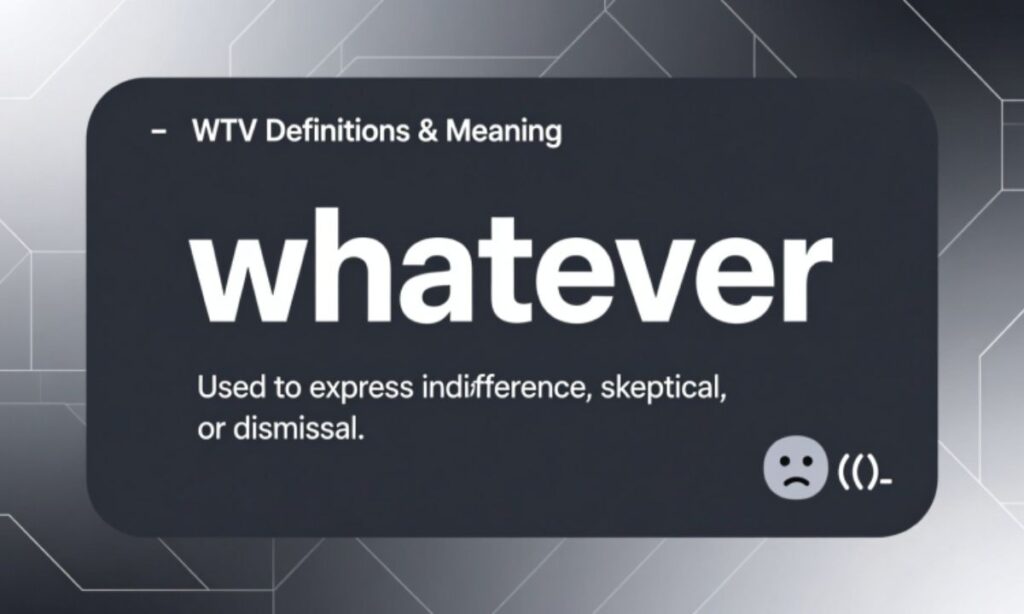
WTV is a popular texting slang abbreviation that stands for “whatever.” This internet slang expression conveys indifference, dismissiveness, or casual agreement depending on the conversation’s context and the sender’s intended tone.
The WTV abbreviation serves as a quick reply option in fast-paced online messaging. When someone types WTV, they’re typically expressing apathy, showing they don’t have strong feelings about something, or indicating relaxed acceptance of a situation.
Origins & History
The WTV slang meaning emerged from SMS messaging culture when character limits made brevity essential. As mobile texting evolved in the early 2000s, users created short text abbreviations to communicate faster and more efficiently.
This casual texting language gained momentum with the rise of instant messaging platforms and social media. The abbreviation reflects broader trends in digital communication, where speed and convenience often trump formal writing rules and traditional grammar conventions.
Read Also This: https://trueheartblessings.com/wyf-text-meaning-explained/
Usage in Different Contexts
WTV in texting carries different meanings based on surrounding words and relationship dynamics. The tone can range from genuinely neutral to passive-aggressive, making context in online chats crucial for accurate interpretation and understanding.
Understanding tone in texting requires reading the entire conversation flow. A playful WTV between friends differs significantly from a dismissive text message in an argument, highlighting how informal expressions adapt to various social situations.
Social Media & Texting
On platforms like TikTok, Instagram, and Snapchat, WTV in social media appears frequently in comments and replies. The TikTok slang usage often conveys relaxed attitudes toward content or expresses playful indifference to trending topics.
Instagram slang incorporates WTV in quick social media comments where users want brief responses. On Twitter and in DMs, this messaging acronym helps maintain conversational flow while expressing casual disinterest or easygoing agreement.
| Platform | Common WTV Usage | Typical Tone |
| TikTok | Comments on videos | Playful, casual |
| Story replies, DMs | Neutral, dismissive | |
| Snapchat | Quick chats | Informal, relaxed |
| Tweet responses | Sarcastic, indifferent | |
| Text Messages | Everyday conversations | Varies by context |
Professional or Formal Settings
Using WTV in professional communication settings is generally inappropriate and discouraged. Work emails and formal business discussions require complete words and respectful language that maintains professional boundaries and clear communication standards.
The abbreviation lacks the professionalism needed for formal settings. Employees should avoid chat slang when communicating with supervisors, clients, or colleagues, opting instead for complete phrases that demonstrate respect and proper business etiquette.
Pop Culture
Modern slang words like WTV have permeated youth culture through viral videos and trending content. Digital culture embraces these expressions as markers of belonging and understanding current communication trends among younger demographics online.
WTV represents how online conversations shape language evolution in real-time. The abbreviation appears in memes, viral posts, and influencer content, cementing its place in contemporary internet vernacular and everyday digital exchanges.
Common Misunderstandings & Clarifications
Many people misinterpret WTV’s intended meaning due to tone interpretation challenges in written messages. Without vocal cues or facial expressions, what does WTV stand for can seem confusing, leading to unnecessary conflicts or miscommunication between people.
Clarity in messaging becomes essential when using abbreviations. Adding context clues, emojis, or follow-up messages helps prevent misunderstandings.
Remember that WTV isn’t always negative, sometimes it genuinely means relaxed acceptance or casual agreement in conversations.
Common WTV Misinterpretations:
- Aggressive dismissal when sender meant casual indifference
- Lack of concern interpreted as rudeness instead of neutrality
- Sarcastic tone mistaken for genuine agreement
- Playful banter seen as serious disrespect
- Apathy confused with active disagreement or anger
Alternatives & Synonyms
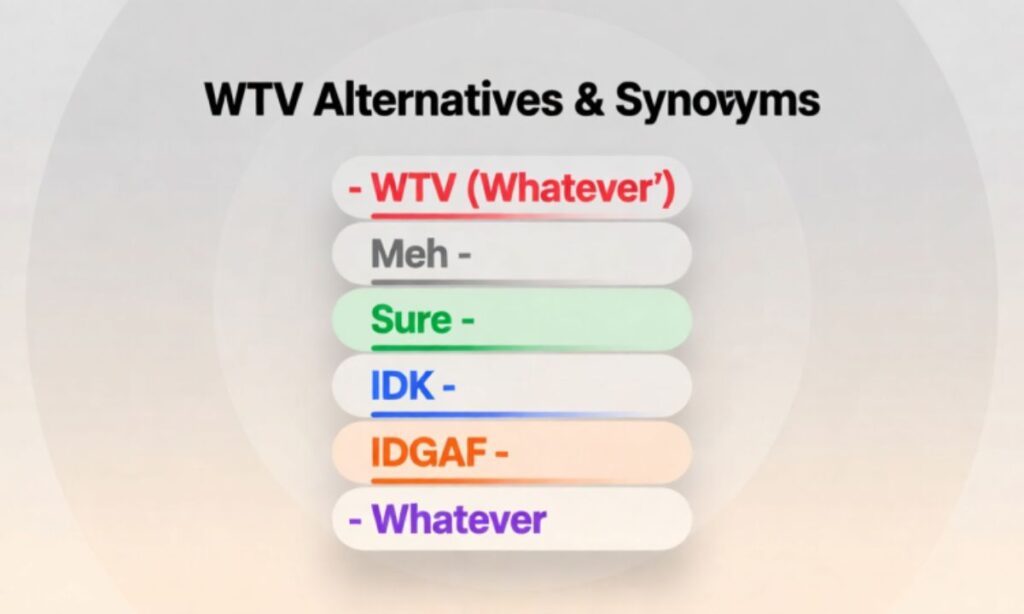
Several alternatives to WTV exist for expressing similar sentiments. Common options include “meh,” “idk” (I don’t know), “sure,” “okay,” or simply typing out “whatever” completely for better clarity and reduced ambiguity.
Related slang terms like “IDGAF” (I don’t give a f***), “WTH” (what the hell), and “WT” (what) serve different purposes. While “btw” (by the way) changes topics, WTV specifically addresses indifference or casual acceptance in ongoing discussions.
| Expression | Meaning | Formality Level | Best Context |
| WTV | Whatever | Very casual | Friends, peers |
| Meh | Indifference | Casual | Informal chats |
| Sure | Agreement | Neutral | Any setting |
| IDK | Don’t know | Casual | Quick replies |
| IDGAF | Strong apathy | Very casual | Close friends only |
| Whatever | Same as WTV | Semi-casual | More formal than WTV |
Common Translations / Related Phrases
WTV translates to complete indifference or relaxed acceptance across most texting scenarios. The phrase “I don’t really care” or “it’s up to you” captures its essence, though the specific meaning depends heavily on conversation dynamics.
Understanding messaging acronyms requires familiarity with quick conversations patterns. WTV functions similarly to shrugging shoulders in face-to-face communication, expressing lack of concern without necessarily indicating hostility, rudeness, or active disagreement toward someone.
WTV in Different Emotional Contexts:
- Neutral: “Want pizza or burgers?” “WTV works for me”
- Dismissive: “You never listen!” “WTV, I’m done arguing”
- Playful: “I’m picking the movie tonight” “WTV you say, boss”
- Sarcastic: “This is important!” “Yeah, WTV you say”
- Agreeable: “Should we leave now?” “WTV you prefer”
How WTV Reflects Modern Communication
The rise of WTV in texting demonstrates how digital communication prioritizes speed over formality. Character limits on early platforms created necessity for brevity in communication, fundamentally changing how people express themselves online through abbreviated language.
Quick replies dominate today’s messaging landscape. The WTV abbreviation meaning reflects broader shifts in communication trends where efficiency matters more than elaborate explanations. This evolution shows how technology directly shapes language and social interaction patterns.
Youth culture particularly embraces these changes, with modern slang words becoming identity markers. Understanding terms like WTV helps bridge generational gaps in online conversations, allowing people of different ages to communicate more effectively across digital platforms.
Reading the Room: Context Matters
Successfully using WTV in social media requires reading situational context carefully. A response that works perfectly in chat rooms with friends might seem disrespectful in conversations with family members, teachers, or authority figures who expect different communication standards.
Tone in texting remains challenging because written words lack vocal inflection. Before sending WTV, consider your relationship with the recipient, the conversation’s seriousness, and whether the abbreviation might cause misunderstandings that damage relationships unnecessarily.
Professional vs casual language boundaries must be respected. While casual texting language works great for personal relationships, maintaining appropriate communication standards in different environments shows maturity, awareness, and respect for social norms and professional expectations.
When to Use WTV:
- Casual conversations with close friends
- Playful banter in group chats
- Expressing genuine flexibility about plans
- Quick responses in informal expressions
- Relaxed discussions about minor decisions
When to Avoid WTV:
- Professional work communications
- Conversations with parents or authority figures
- Serious or emotional discussions
- When someone is clearly upset
- Formal or academic settings
The Future of Texting Slang
Internet slang constantly evolves as new platforms emerge and communication trends shift. Today’s popular messaging acronyms might become outdated tomorrow, replaced by newer expressions that better capture evolving attitudes and technological capabilities in digital spaces.
What does WTV mean will likely remain relevant as long as people value efficiency in online messaging. However, its specific connotations and popularity may change as digital culture develops new ways to express indifference, apathy, and casual agreement through text.
The ongoing evolution of texting culture suggests that abbreviated expressions will persist. Whether through new short text abbreviations or evolving meanings for existing terms, digital communication will continue prioritizing speed, convenience, and relatable expressions that resonate with users.
Practical Tips for Using WTV
Understanding what does WTV stand for is just the beginning, using it appropriately requires emotional intelligence.
Always consider the recipient’s communication style, current mood, and whether they’ll interpret your message as intended before sending potentially ambiguous abbreviations.
Adding context helps prevent tone interpretation problems. Follow WTV with explanatory text, use emojis strategically, or simply type “whatever” fully when clarity in messaging matters more than saving a few characters in your conversation or text.
Best Practices:
- Match the conversation’s existing tone
- Use sparingly to avoid seeming disengaged
- Add emojis for clarity (😊 vs 😒 changes meaning)
- Spell out “whatever” in important discussions
- Consider the recipient’s familiarity with chat slang
Read Also This: https://trueheartblessings.com/fs-meaning-in-texting/
Frequently Asked Questions
What does WTV mean in text?
WTV usually means “whatever” and is used to show indifference or a casual attitude in messages.
What is WTV slang used for?
WTV is used when someone doesn’t strongly care about a topic or wants to seem relaxed about it.
Does WTV mean something bad?
No, WTV isn’t bad by itself, but it can sound rude or dismissive depending on tone and context.
How do you use WTV in a sentence?
You can use WTV when you want to shorten “whatever,” like “WTV you say” in a casual chat.
Is WTV the same as whatever?
Yes, WTV is simply a shortened texting version of the word “whatever.”
Can WTV be sarcastic?
Yes, WTV is often used sarcastically to show annoyance or lack of interest.
Do younger people use WTV more?
Yes, teenagers and younger users commonly use WTV in texts and social media.
Is WTV formal or informal?
WTV is informal and best used in casual conversations, not professional writing.
Why do people type WTV instead of whatever?
People use WTV to save time and type faster while texting or chatting online.
Can WTV confuse people?
Yes, some people may not understand WTV if they’re not familiar with texting slang.
Conclusion
What does WTV mean in text ultimately depends on context, tone, and relationship dynamics.
This versatile texting slang expresses everything from playful indifference to genuine flexibility, making it a staple of modern digital communication culture.
Understanding WTV meaning in text helps navigate online conversations more effectively. Whether scrolling through social media comments or chatting with friends, recognizing this abbreviation’s nuances improves communication skills and prevents unnecessary misunderstandings in daily digital interactions.

Dome Ellis, the founder of TrueHeartBlessings, a space created to bring faith into everyday moments where hope is needed most. Through heartfelt reflections and soul-lifting blessings, my mission is to share divine encouragement, inspire inner peace, and remind readers that even the smallest moments can carry powerful miracles. Every word I write is rooted in love, faith, and the belief that light always finds its way to those who seek it.